Hotel EV Charging Marketing: How to Turn Chargers into Bookings


Marketing hotel EV charging works when guests can find the details before they book, trust the chargers on arrival and leave a review that says so. The marketing is the easy part. It only pays back if the chargers behind it are reliable, simple to pay for and properly managed, which is why we plan the hardware, the software and the guest message together. Our guide to planning, funding and operating hotel chargers covers the install side. This article covers how to sell what you have installed.
TL;DR
Publish connector types, speed, number of bays, price, access rules and location on your website before a guest has to ask.
Get listed on booking sites and charging apps: many travel sites now filter hotels by EV charging.
Reviews decide bookings, so a charger that works first time is your best marketing asset.
Send guests booking-time instructions and measure charging enquiries, direct bookings and charger usage.
Table of Contents
Why charging is worth marketing
Search interest is climbing. IAB UK’s February 2025 travel report shows “hotels with EV charging” as a keyword growing 101% year on year.
Supply is thin. A RAW Charging whitepaper, reported by Sustainable Hotel News in October 2025, found that only 8% of the UK’s 37,000 public charging points are at hotels. The same report found 48% of EV drivers would not book a hotel without a charging station, and put the potential loss at £58 to £142 per night per available room. Treat these as the whitepaper’s figures, not guarantees for your site, but the direction is clear: a hotel that shows charging clearly stands out to a growing group of travellers.

The same report found 31% of guests reported negative charging experiences, citing slow charging, complex payment and unreliable equipment. That is the gap a well-run, well-described charging offer fills.
What to publish before a guest books
An EV driver is planning a route, not just a room. HotelSEO Lab lists what they need: connector types, Level 2 or DC fast charging, number of stalls, who can use them, cost, whether bays can be reserved and their exact location. Put these on the rooms page, the amenities page and in a short FAQ.
A practical checklist for your page:
Connector and speed. Say “7kW AC, Type 2” or “50kW DC, CCS” rather than “EV charging available”.
Number of bays. Give the count, and say whether any are accessible.
Who can use them. Guests only, guests and visitors, or open to the public.
Reserved or first come. If bays cannot be booked, say so plainly.
Location. A map pin and a photo of the bays, plus a note on lighting and walking distance to reception.
Price. State the tariff per kWh and any idle or overstay fee.
Be clear about payment
The BVRLA’s Bon Voyage Charge guide says guests want obvious charging costs, transparent overstay fees, communicated penalties for blocking a bay and clarity on whether an app, contactless payment or hotel registration is needed. Complex payment was the most common complaint in the RAW Charging findings, at 47%.
This is where the back office matters. Our charging software and payment and RFID options let you set tariffs, run contactless or RFID access and apply idle fees, so what you publish matches what the guest sees at the charger. You can see the range on our commercial EV charging page.

Where to promote your chargers
Your own website
Add charging to the homepage amenities list, the rooms and rates pages, and the booking confirmation. Name the page clearly, so a search for “hotels with EV charging” near your town finds it. Use the same wording everywhere: one description of speed, price and access, repeated consistently.
Booking sites and charging apps
UKHospitality reports that hotels showing this feature are more likely to stand out in search results, increasing direct bookings and occupancy. The BVRLA advises making sure chargepoints can be found on booking sites and aggregator apps. Tick the EV charging amenity on every listing, and keep it updated if you add bays.
If your chargers are open to the public, list them on charging apps and maps too. Our public EV charging service covers public-facing chargers, and the same listings bring drivers who may become diners or future guests.
Social media and email
NielsenIQ and CGA found that 60% of 18 to 34-year-olds visit a hotel’s social media pages before booking, 18 percentage points above the average. Show the bays in use: a photo of a car charging with the hotel behind it says more than a caption. Pin a post explaining how charging works and what it costs.
In email, add a short charging block to pre-arrival messages. The BVRLA suggests sending information on how to find the chargepoints and what to do on arrival at the time of booking. Include a map, the payment method and who to call if something fails.
Use reviews as your proof
Reviews carry weight. BDO’s Hotel Britain 2024 report found that 59% of UK travellers would be less likely to book after reading a bad review, and 38% said reviews could be the deciding factor between hotels. NielsenIQ and CGA found 87% of recent hotel visitors were likely to read reviews before booking.
For charging, that means one thing: a charger that fails on a guest’s first night becomes a public review. To protect your rating:
Ask EV guests for feedback after checkout, with a prompt that mentions charging.
Reply to charging comments, good or bad, with specifics.
Keep uptime high. Our maintenance plans come in Basic, Standard and Fully Managed levels, and our article on why EV charger maintenance matters explains how it keeps infrastructure running.
The BVRLA guide treats promotion as one part of a wider guest-experience checklist: accessible, well-lit chargepoints, clear payment terms, ease of use and reliability backed by a maintenance contract. Marketing that promises more than the chargers deliver does harm.
Measure whether it works
Set a baseline before you launch the campaign, then track monthly:
Measure | Where to find it | What it tells you |
Visits to the EV charging page | Website analytics | Whether travellers find the information |
Charging-related enquiries | Email, phone, booking notes | Intent before booking |
Direct bookings from EV pages | Booking engine | Return on the page and listings |
Charger sessions and kWh | Charging software | Whether guests use what you promote |
Charging mentions in reviews | Review sites | Guest experience and trust |
Charger availability | Management platform | Reliability behind the promise |
Session data is what links marketing to the hardware. Our software gives you back-office management of your charge points, so you can compare usage with the campaign calendar and adjust tariffs or messaging.
Our perspective
We see hotel charging as a guest service first and a marketing line second. The best-promoted charger is one that works every time and is easy to pay for, because that is what ends up in reviews. That is why we handle the whole job: feasibility and site assessment, design, installation, commissioning and long-term management. We offer AC and DC chargers, load management so your bays do not overload the site supply, and software with payment and RFID options so the tariff you advertise is the tariff the guest pays. We also help businesses apply for available UK EV charging grants where eligible, and we offer funded, shared-investment and charging as a service models, so the cost of getting started need not hold back the marketing plan. Swift Charging
Make your chargers ready to promote
If you are still deciding on bays, or your current chargers are slow to use or hard to pay for, fix that first, then market it. We can review your site, advise on the right mix of chargers and manage them once installed. Start with a commercial EV feasibility review, or check grant eligibility for your property.
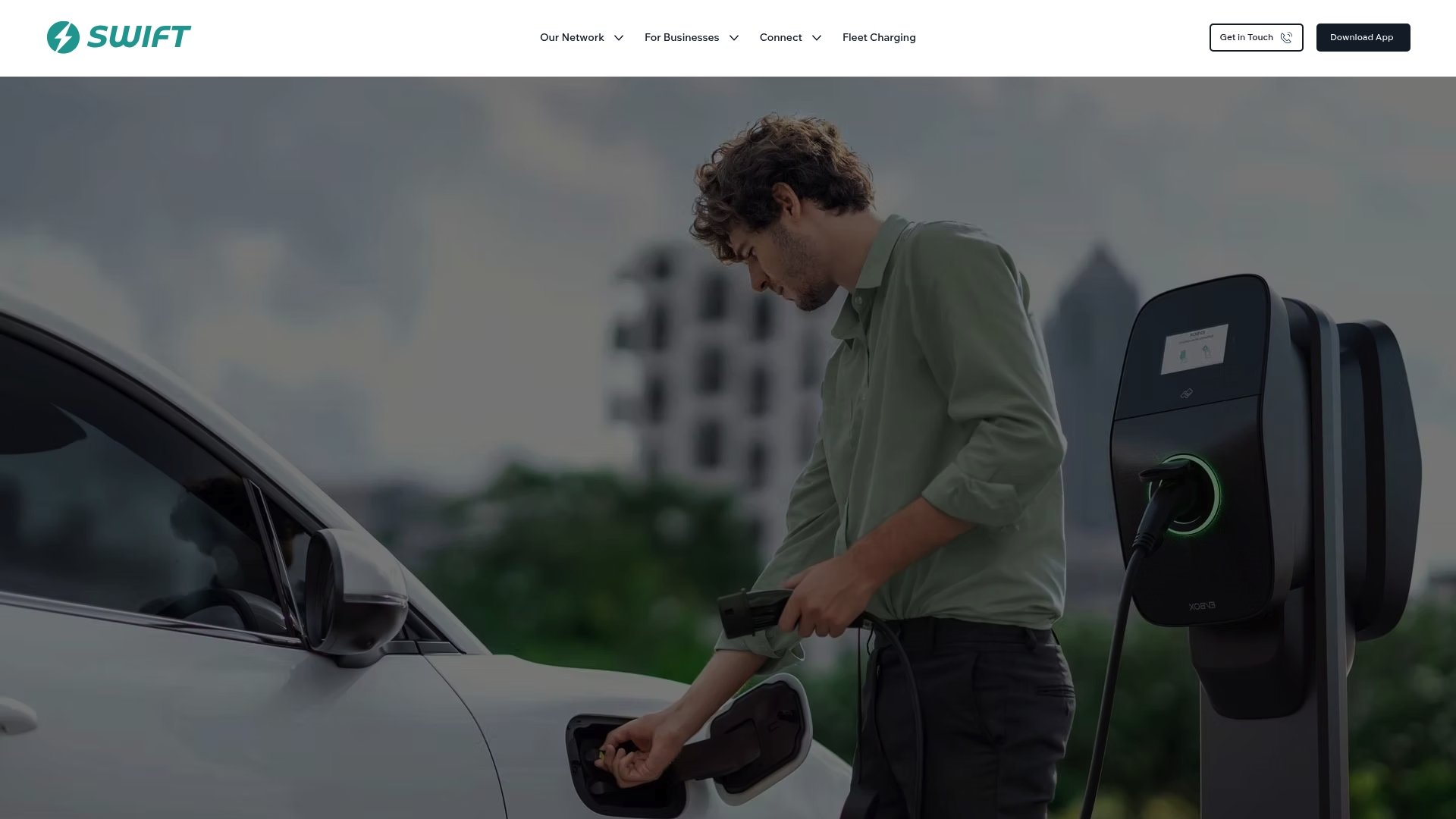
If you have land or car parking that could host public chargers alongside your guest bays, our page on hosting EV chargers on your site explains the options.
FAQ
Should I advertise EV charging before it is installed?
Wait until you have a firm commissioning date, then announce it. Guests who book on the strength of a promise and find nothing will say so in reviews. Once the date is confirmed, update your website and listings the same week.
Do I need to offer free charging to attract guests?
No. The guest-facing priority is clarity: a visible price, simple payment and fair idle fees. The BVRLA guide stresses obvious costs rather than free use. Your software lets you set the tariff that suits your site.
Which details matter most on my website?
Connector type, charging speed, number of bays, price, who can use them and where they are. Place these on the rooms page, amenities page and FAQ so a traveller does not need to phone to find out.
Can public charging help my hotel’s marketing?
Opening bays to the public puts your site on charging maps and brings drivers to your car park, who may return as guests or diners. We can advise on public charging and revenue models for hosts.
Sources
Recommended