Claim £2,000 Per Socket for UK School EV Charging

State-funded schools can claim an enhanced Workplace Charging Scheme voucher covering 75% of costs, up to £2,000 per socket, for up to 40 sockets. That is the main funding route for school EV charging in the UK right now. Your next move is simple: book a site survey with an OZEV-authorised installer before you apply.
TL;DR:
Schools can claim up to 75% of EV charging costs through the Workplace Charging Scheme, with a maximum of £2,000 per socket and a limit of 40 sockets per institution.
The grant covers hardware and basic installation but generally does not include civil works or supply upgrades, which schools must budget for separately.
A site survey must be arranged before applying, and DNO engagement is crucial early to avoid delays caused by supply upgrade timelines.
The scheme is scheduled to close on March 31, 2027, and vouchers are valid for 180 days, requiring careful planning of installation during school holidays.
Additional funding options and local authority budgets can supplement the grant, and choosing experienced OZEV-authorized installers ensures smooth project progression.
Table of Contents
What grants and government support apply to school EV charging?
The Workplace Charging Scheme for state-funded education institutions is the scheme built specifically for your sector. It pays 75% of the purchase and installation cost of an EV chargepoint, capped at £2,000 per socket, with a limit of 40 sockets per institution. That is a meaningful contribution towards school parking EV charging infrastructure, whether you are fitting two chargers for staff or planning a larger rollout across a multi-academy trust.
There is a change worth flagging now rather than later. From 1 April 2026, the per-socket cap drops from £2,500 to £2,000, as set out in the GOV.UK application guidance. If your school is close to submitting an application, that timing matters.
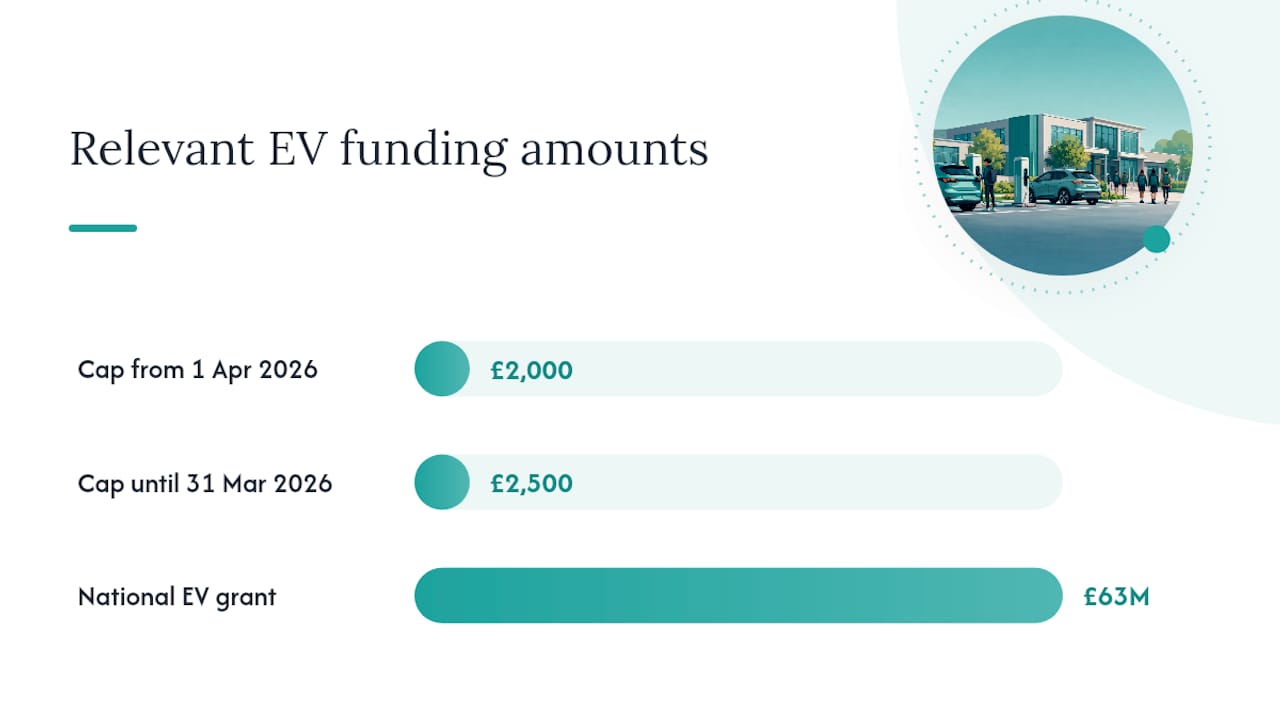
The scheme itself is not open-ended. It is scheduled to close on 31 March 2027, and vouchers issued to successful applicants are valid for 180 days from the date they are granted, per the same find-government-grants.service.gov.uk listing. Beyond the WCS, sector press has reported additional funding activity, including a £63 million EV Infrastructure Grant announced in industry coverage. Treat that kind of reporting as a signal to check GOV.UK directly, not as confirmed policy, since funding announcements shift faster than most guides can track.
In practice, most state schools will be working with:
The enhanced WCS education rate as the primary grant.
Occasional additional infrastructure funding announced separately, worth monitoring via GOV.UK.
Local authority or trust-level capital budgets to cover costs the voucher doesn’t reach.
Eligibility and how to apply, step by step
Before you open an application, confirm your school actually qualifies and gather what the form will ask for.
Who qualifies:
State-funded schools, academies, and further education colleges in Great Britain are eligible; some exclusions apply for certain territories, so check your institution’s status on GOV.UK first.
Independent schools are treated differently under the scheme and should verify their specific eligibility rather than assume the state-funded rate applies.
Academy trusts can apply per school, and the 40-socket cap applies per institution, not per trust, according to the WCS listing. A trust running six schools could, in theory, coordinate six separate applications.
What you need before you apply: 4. Your establishment’s SEED or URN reference, confirmation of dedicated off-street parking, and the authorised installer’s OZEV registration number. 5. A named contact with authority to apply on the school’s behalf, using an email address that matches the institution’s official domain. GOV.UK checks this, and a personal or generic email will invalidate the submission.
The application flow itself: 6. Arrange a site survey with your chosen installer first. This isn’t optional paperwork; it shapes what you can realistically apply for. 7. Submit the online application through the Workplace Charging Scheme guidance. 8. Receive your voucher, typically within around five working days of a successful application. 9. Have your installer complete the work within the 180-day voucher window and claim the grant directly against the invoice.
Site survey, grid connection and the installation process
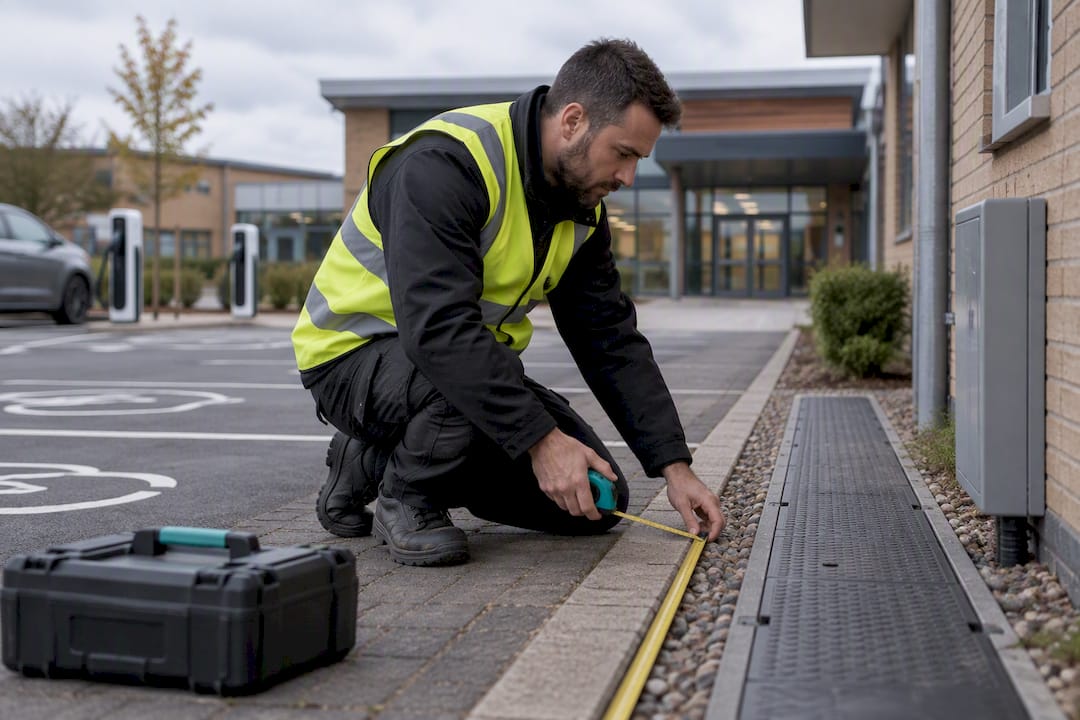
A proper site survey covers more ground than most administrators expect. Your installer should assess the incoming electricity supply, the spare capacity in your distribution board, the layout of parking bays relative to cabling routes, disabled access requirements, and safeguarding considerations around where chargers physically sit on site. Civil works scope, whether that means trenching across a car park or running cable through an existing duct, gets priced at this stage too.
Grid connection is where projects most often stall. If your school’s existing supply can’t handle multiple chargers, you’ll need Distribution Network Operator involvement, and DNO upgrade work can take considerably longer than the charger installation itself. The IET’s guide to EV charging infrastructure for local authorities recommends early DNO engagement precisely because late-stage supply problems are the most common cause of installation delays.
A typical project runs through four phases:
Feasibility and site survey.
Design, including any DNO liaison and civil works planning.
Groundworks and physical installation.
Commissioning, followed by the installer claiming the voucher against the invoice.
Pro Tip: Ask your installer to flag DNO requirements during the site survey, not after design is finalised. Finding out you need a supply upgrade midway through a project can add months to your timeline.
Typical costs, what the grant covers, and revenue options
Installed costs for a 7 to 22 kW AC charger vary widely depending on groundworks and supply capacity. Market guidance from installers suggests hardware alone often sits around £800 to £1,200 per unit, with a fully installed single charger ranging from roughly £1,500 up to several thousand pounds once civil works or a supply upgrade enter the picture, according to cost guidance from Evova.
What the WCS voucher typically covers:
Up to 75% of purchase and installation costs, capped at £2,000 per socket.
Standard hardware and installation labour within that cap.
It does not usually stretch to cover major civil works or a full supply upgrade, which schools should budget for separately.
Beyond the grant itself, chargers can generate income. Opening chargepoints to the public triggers the Public Chargepoint Regulations 2023, which require clear pence-per-kWh pricing, payment options, and a staffed helpline, as confirmed in GOV.UK’s Public Chargepoint Regulations guidance. Many schools also offer EV salary sacrifice schemes for staff, which can reduce running costs for employees while supporting your sustainability goals.
How to choose an installer for your school
Not every installer on the OZEV list has school experience, and that distinction matters more than the sales pitch suggests.
A quick checklist before you sign anything:
Confirm OZEV authorisation directly, since this is a condition of the grant, not a nice-to-have.
Ask for references from previous school or education-sector installations specifically, not just workplace or retail sites.
Check they have handled DNO liaison before and can talk through timelines confidently.
Confirm they hold appropriate registrations and, where staff will be on site during term time, ask about safeguarding procedures such as DBS checks.
Questions worth asking at first contact: what does the site survey actually assess, who manages the DNO conversation if one is needed, how do they handle the voucher claim process, and what ongoing maintenance or management options do they offer once chargers are live?
Pro Tip: Treat any installer who skips the site survey, avoids discussing voucher claims directly, or can’t name a single school reference as a warning sign, not a shortcut.
Swift Charging’s perspective: lessons from school installs
Working across school sites, including projects like our installation at Roman Road Primary School, has taught us that the technical part of school EV charging is rarely the hard part. The grant mechanics and the DNO timeline are what catch administrators out.
Term scheduling is the single biggest lever schools underuse. Vouchers run for 180 days, which lines up neatly with applying in spring term and installing across the summer holidays, minimising disruption to drop-off and pick-up. DNO lead times, when a supply upgrade is needed, are the other recurring delay, and pre-planning passive infrastructure, meaning cabling and ducting installed now even if you only fit two chargers today, cuts the cost of expanding later.
Our recommendation is straightforward: plan for the fleet or visitor chargers you’ll want in three years, not just the two you need this term.
— Swift Charging
Get a free site survey and grant support from Swift Charging
We offer services including site surveys, support with Workplace Charging Scheme applications, and project management from feasibility to commissioning and ongoing maintenance. Where most schools lose time is in coordinating installers, DNOs, and grant paperwork separately. We handle it as one process.

Our workplace EV charging solutions cover the full journey: site assessment, OZEV grant application support, installation, and long-term maintenance through Basic, Standard, or Fully Managed packages. If you’re planning a rollout across multiple sites in a trust, our commercial EV charging solutions also cover fleet electrification and public charging compliance, so future expansion doesn’t mean starting from scratch.
Request a site survey through our workplace charging page and get a clear view of your grant eligibility, likely costs, and realistic installation timeline before you commit to anything.
Sources
For the current rules, always verify against the primary guidance rather than a secondary summary. The Workplace Charging Scheme for state-funded education institutions listing and the GOV.UK application guidance cover eligibility and voucher mechanics in full. For technical planning, the IET’s guide to EV charging infrastructure for local authorities remains the most detailed reference on site strategy and DNO engagement available in the UK.
FAQ
Do schools have EV chargers?
A growing number of UK schools do, largely driven by the enhanced Workplace Charging Scheme, which covers 75% of costs up to £2,000 per socket for state-funded institutions, as detailed in the official WCS listing. Uptake varies by region and depends heavily on whether the school’s electrical supply can support additional load without an upgrade.
What are the new EV charging regulations in the UK?
The Public Chargepoint Regulations 2023 require any chargepoint opened to public use to display clear pence-per-kWh pricing, offer contactless payment, and provide a free helpline, confirmed in GOV.UK’s guidance. Separately, the WCS education rate cap reduced from £2,500 to £2,000 per socket from 1 April 2026.
Are there free public EV chargers in the UK?
Genuinely free public chargers are uncommon, since most site hosts, including some schools that open chargers to visitors, charge per kWh to cover electricity and maintenance costs. Where a school does open chargers to the public, pricing must comply with the Public Chargepoint Regulations 2023 rather than being offered at no cost.
Is it free to charge an EV at Tesco?
Some supermarket car parks have offered free or discounted charging as a customer incentive in the past, though this varies by retailer, location, and time, and terms change frequently. Check signage or the specific retailer’s current policy at the site, since national rules under the Public Chargepoint Regulations 2023 govern pricing transparency rather than mandating free charging.
How much does school EV charging cost after the grant?
Out-of-pocket costs depend on your setup, but a single 7 to 22 kW AC charger can run from roughly £1,500 to several thousand pounds installed, with civil works and supply upgrades adding to that figure, per cost guidance from Evova. The WCS voucher offsets up to £2,000 of that per socket, leaving schools to cover the remainder plus any major groundworks.
Recommended